A unique competition to crown Alaska’s chunkiest bear had a winner this week! Have you heard of it?
Fat bear week sounds like a joke but its not! Every northern autumn, millions of people vote on which brown bear at a remote Alaskan national park has done the best job of packing on weight before winter.
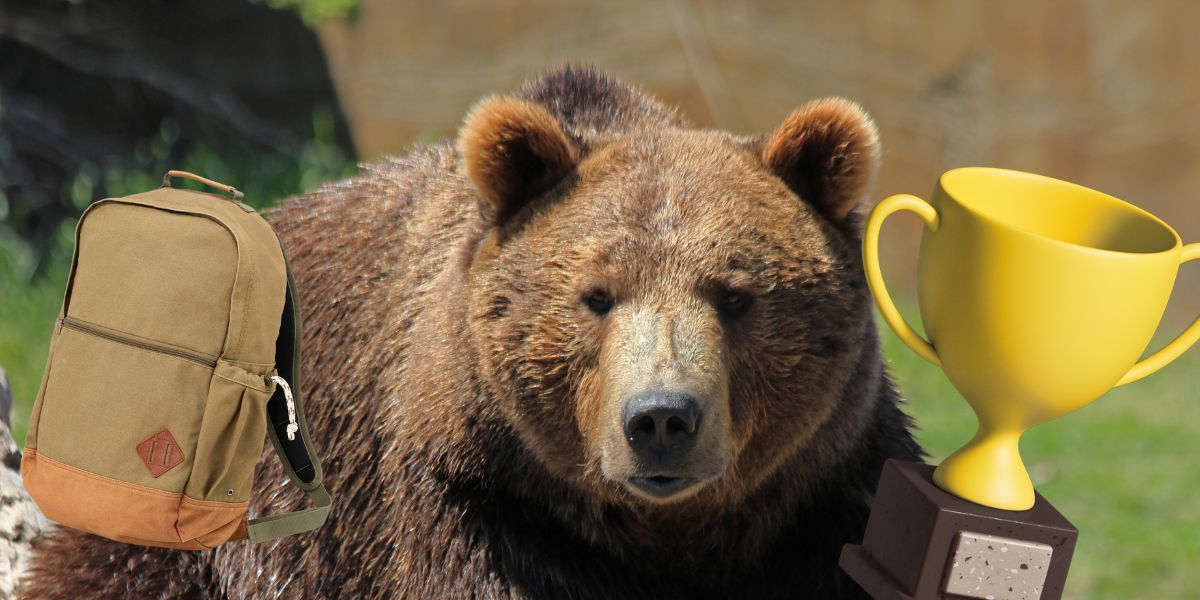
This year’s contest wrapped up only a few days ago. The winner, a large male known as Backpack, beat a female called 910 by a little more than 5,000 votes. More than 2.5 million ballots were cast.
That sounds like a joke but It is not
Fat Bear Week happens at Katmai National Park and Preserve, on the Alaska Peninsula in the far southwest of Alaska. The park is huge, with more than four million acres of volcanoes, lakes, tundra, and salmon rivers (it’s almost impossible to reach by road). Most visitors fly in by small plane.
From Sydney, Alaska is roughly 11,700 kilometres away. A commercial flight to Anchorage can take a day or more, and Katmai itself is still another hop from there. For most of us, the only realistic way to watch the bears is online.
The action is concentrated on a short stretch of the Brooks River, especially Brooks Falls. In summer and early autumn, sockeye salmon fight their way upstream to spawn. The waterfall creates a bottleneck. Bears stand in the current and snatch fish out of the air, or wait below the falls for exhausted salmon to drift past. Live cameras run for months. By September, the same animals who looked lean in June have turned into walking barrels.
Australia has no native bears. Koalas are marsupials, not bears, and our winters are milder. Our large mammals do not spend half the year eating a year’s worth of food so they can sleep through the other half.
Why a fat bear is a successful bear
Brown bears at Katmai (coastal cousins of the grizzly) emerge from their dens in spring thin and hungry. Food is scarce at first. Then the salmon arrive.
From late June into September, the bears enter a state called hyperphagia: an almost compulsive need to eat. A single sockeye salmon can contain thousands of calories. A determined bear may eat dozens in a day. Large males can put on hundreds of kilograms. Some estimates put daily fat gain at around a kilogram when the fishing is good.
That fat has to last. In October and November, the bears dig dens on nearby mountain slopes and settle in for winter. They do not eat or drink. Their metabolism drops. They can lose up to a third of their body weight before they emerge again in spring. Pregnant females give birth in the den and nurse cubs on stored fat. A skinny bear going into winter is a bear in trouble. A fat bear is a bear that found enough salmon, avoided injury, and held its place on a crowded river.
Park staff put it this way: fat equals survival.
Fat Bear Week originated small. In 2014, then-ranger Mike Fitz noticed a webcam viewer posting side-by-side photos of the same bear in June and September. The change was startling. Fitz and colleagues turned that observation into “Fat Bear Tuesday”: a one-day vote on Katmai’s Facebook page. The response was so strong they expanded it to a week in 2015.
It now works like a sports bracket. Rangers choose a field of identifiable bears — this year 16, up from the usual 12 and pair them in head-to-head matchups. Voters look at “before” and “after” photos, read short biographies, and pick the animal they think best shows fatness and success. Voting happens on fatbearweek.org during a set window each weekday. Weekend days are off. The last two remaining bears meet in a final, nicknamed Fat Bear Tuesday.
The bears themselves are not competing. They have numbers and nicknames because researchers and webcam watchers can recognise individuals by scars, ear shape, fishing style and temperament. Otis, a patient older male, has won four times. Grazer, a mighty mother, won in 2023 and 2024. Chunk took the title in 2025. There is even a junior contest for cubs.
People vote for different reasons. Some pick the roundest silhouette. Some pick the biggest transformation from spring to autumn. Some vote for a favourite character. Organisers encourage all of that, because the point is not a scientific weigh-in. The point is to get people looking closely at wild animals and the ecosystem that feeds them.
This year’s champion: Backpack
Bear 89, better known as Backpack, is a medium-to-large adult male with blond ears and a long history at Brooks River. As a cub in 2006, he used to climb onto his mother’s back when she swam, which is how he got the name. His mother, Holly, won Fat Bear Week in 2019. After nearly two decades on the river, including an injured start in life, Backpack has become one of the most recognisable bears there: not always the most dominant, but durable.
In the 2026 final, he received 103,344 votes to 910’s 98,253. The US Department of the Interior, not known for restraint on this subject, dubbed him “Lord of Lard, Earl of Girth and Commander in Beef.”
That tone’s part of the appeal. The contest is silly on the surface and serious underneath. The National Park Service has described it as a “battle of size, skill, snack acquisition, and well-planned loafing.” The bears, as one official noted, participate involuntarily.
The event raises money and attention for the park through the Katmai Conservancy and partners such as explore.org, which runs the live cameras. It has also become a rare piece of online culture that is mostly kind. People argue about brackets, make campaign posters, and watch animals eat fish. Compared with most online spectacles, that is a gentle way to spend a week.
For Australians, there is an extra layer of seasonal oddness. Fat Bear Week falls in late September, which is spring here and autumn there. While we are watching the weather warm up, those bears are racing the coming freeze. By the time Melbourne or Brisbane hits peak picnic weather, Backpack will likely be underground, living off the salmon he ate in August.
The 2026 vote is over, but the cameras are not. explore.org streams Brooks Falls and other spots on the river for much of the season. The bears will keep fishing into October before they peel away to den. Next year’s contest will almost certainly return in late September.
If you want the flavour of it now, search the bear cams, look up Backpack and 910, and compare a June photo with a September one. The difference is the whole story: a wild animal given enough intact habitat and enough fish to become almost comically round, then disappear for winter and come back alive.
So will you be voting next year during fat bear week?